


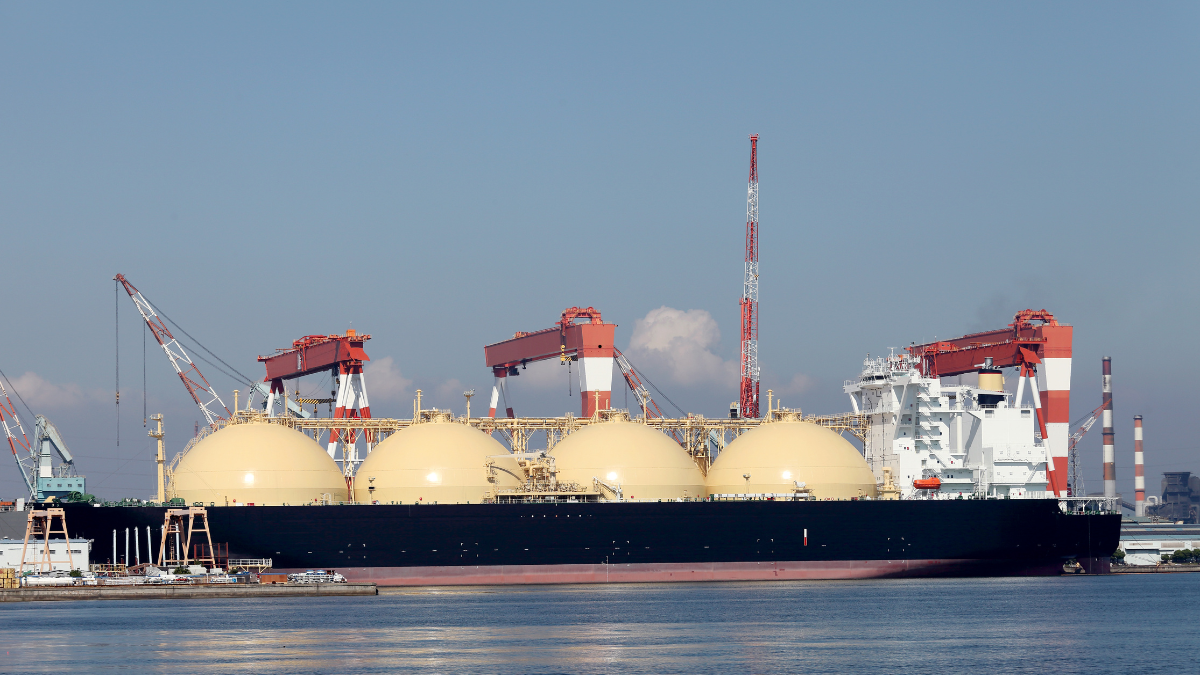
Gas & LNG
Gas markets move quickly, and the infrastructure supporting them has to keep pace. Whether it’s LNG, LPG, or other liquefied gases, the technical demands of low-temperature and pressurized storage mean that gas infrastructure has to be engineered — and operated — to a different standard than conventional liquid storage. Permax’s gas storage capacity is built to meet that standard, giving customers the flexibility and reliability their supply chains depend on.
Engineered for the technical demands of gas
Storing liquefied gases safely requires specialized tank design, insulation, and pressure management systems that differ substantially from standard liquid bulk storage. Our gas infrastructure is built and maintained to handle these technical requirements, with monitoring systems designed to detect and respond to changes in pressure, temperature, or containment integrity in real time.
Supporting energy security
Gas plays a critical role in regional energy security — providing flexible supply that can respond to demand fluctuations, especially during periods of peak consumption or supply disruption elsewhere in the system. By maintaining reliable storage capacity, Permax helps ensure that gas supply chains have the buffer capacity needed to absorb those fluctuations without disruption to end users.
Flexible capacity for changing markets
Gas trade patterns have shifted significantly in recent years, with new supply routes and changing demand dynamics across Europe. Our terminals are positioned to support this flexibility, offering storage arrangements that can adapt to short-term trading needs as well as longer-term supply agreements.
Safety as the top priority
Given the properties of the products involved, safety is built into every aspect of our gas storage operations — from containment design to emergency response planning. Our teams undergo specialized training specific to gas handling, and our facilities are subject to regular inspection and maintenance to ensure systems perform reliably under all operating conditions.
Connectivity for efficient supply chains
Our gas terminals are designed with connectivity in mind, supporting vessel import and export alongside onward distribution by road or rail where applicable. This connectivity allows customers to move product efficiently between supply sources and end markets, minimizing delays and demurrage costs.
Positioned for the future of gas
As energy systems evolve, gas — including LNG — is expected to play a continued role as a transition fuel, alongside emerging carriers like hydrogen and ammonia. Permax is investing in infrastructure that supports both current gas storage needs and the flexibility to adapt as the broader energy mix continues to shift.